
The technique that makes it possible to see colour and shape in our night sky with a camera but not with our own eyes.
Imaging is taking a picture with a camera of an object. A digital image is created for each pixel on the camera’s sensor based on the quantity of photons (particles of light) received at each pixel.
This is just 1 of 135 images taken on 15 January 2025 over the period 18.05pm to 1.57am the next morning. Each image was 180 seconds, so in total nearly 7 hours of exposure time.
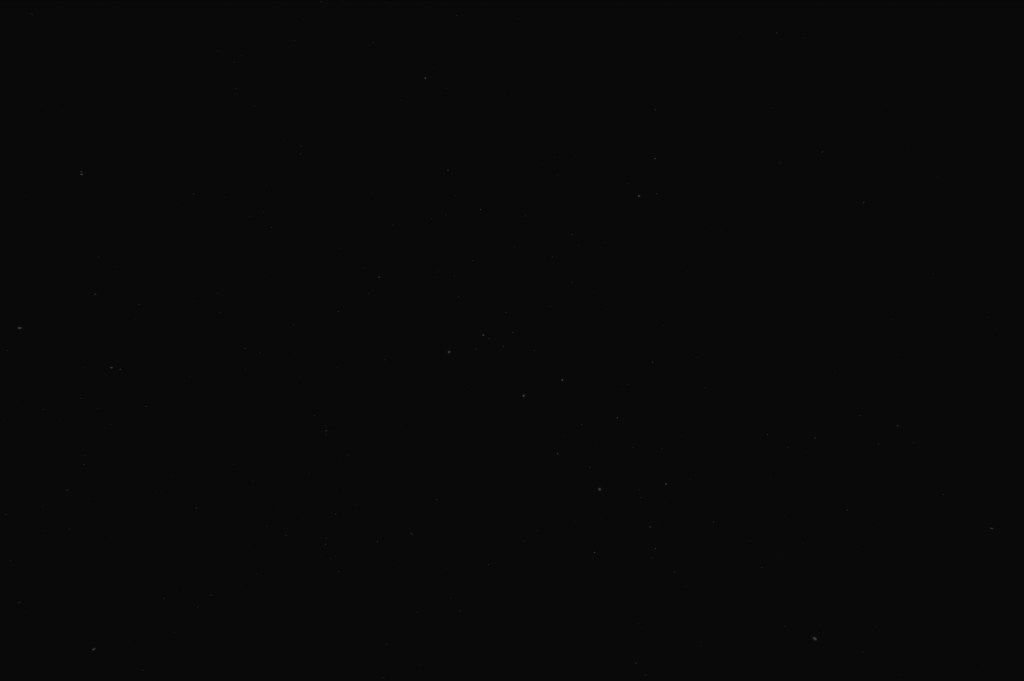
A little disappointing, a few faint stars and that is all, despite an exposure of 3 minutes.
Post imaging processing allows us to reveal what is hidden away in the image:
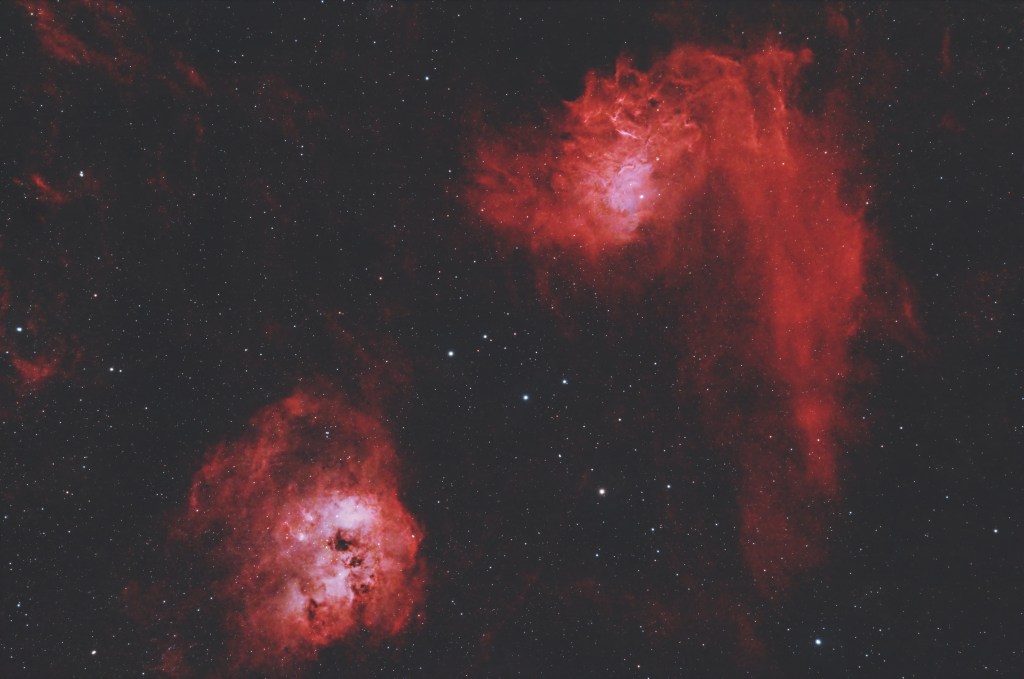
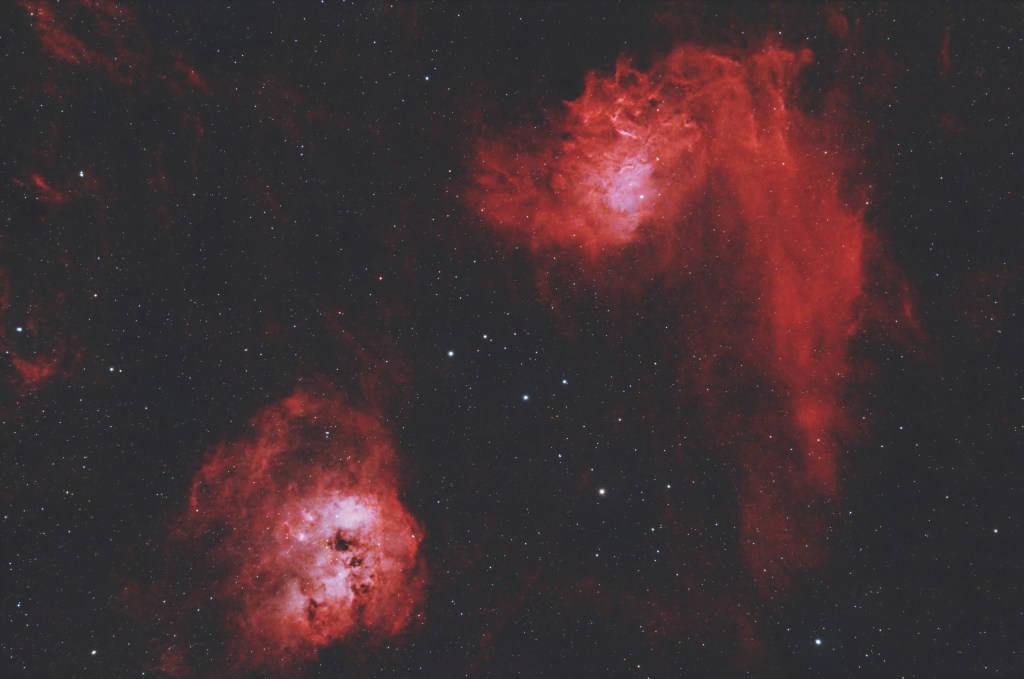
Now we have revealed, using post imaging techniques, the gases and dust of the Tadpole and Flaming Star nebula hidden within our image.
Post image processing is what we do with the images we have taken and consists of 2 parts:
Stacking
For a night sky image, because of distance, atmosphere, the relatively low level of photons as well as the camera sensor sensitivity and design, not every image recorded at the pixel level will be the same as the next image.
Stacking is the process whereby any signal that has been detected at a pixel level of detail in a single image is added to the signal of the next image and a final image produced that is an average of the sum of all the signals at that pixel. This ensures the best possible image is created for each pixel, the averaging reducing noise from the unwanted random variations in pixel brightness that you would see in a single image.
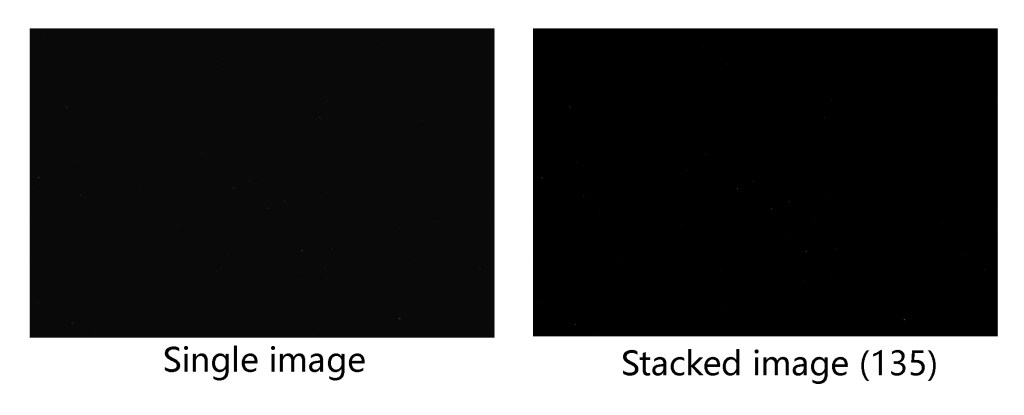
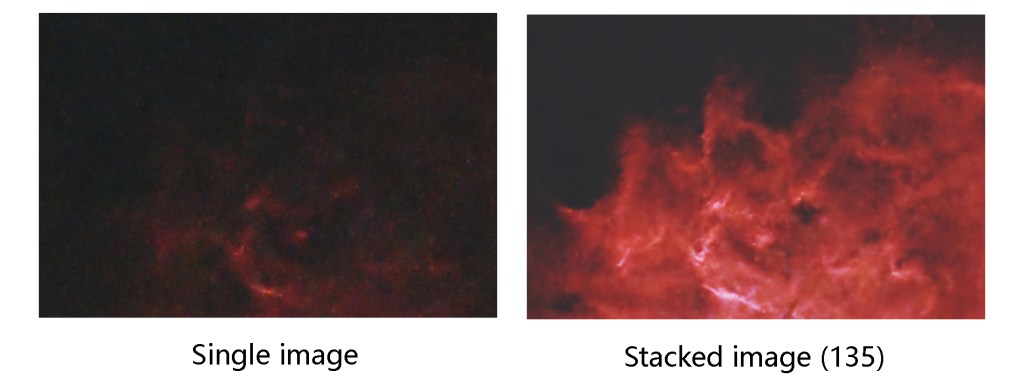
Even though a stacked image represents the best image possible, because we are taking images of a night sky that is black or near black, the stacked image looks to be no different to the single image:
Stretching
Stretching is the process of bringing out the faint details of the image that are not black and scaling them up so that they can be seen. In other words, pixels that show any brightness at all have that brightness multiplied, so revealing brightness and, if a colour image, colour.
Even a single image, when stretched, can show what is hidden away.
The problem of the single image is that, in order to reveal the faint details, it also reveals any weaknesses in the single image and overstretches any of the unwanted random variations in pixel brightness, giving rise to a poor quality image that shows a lot of noise.
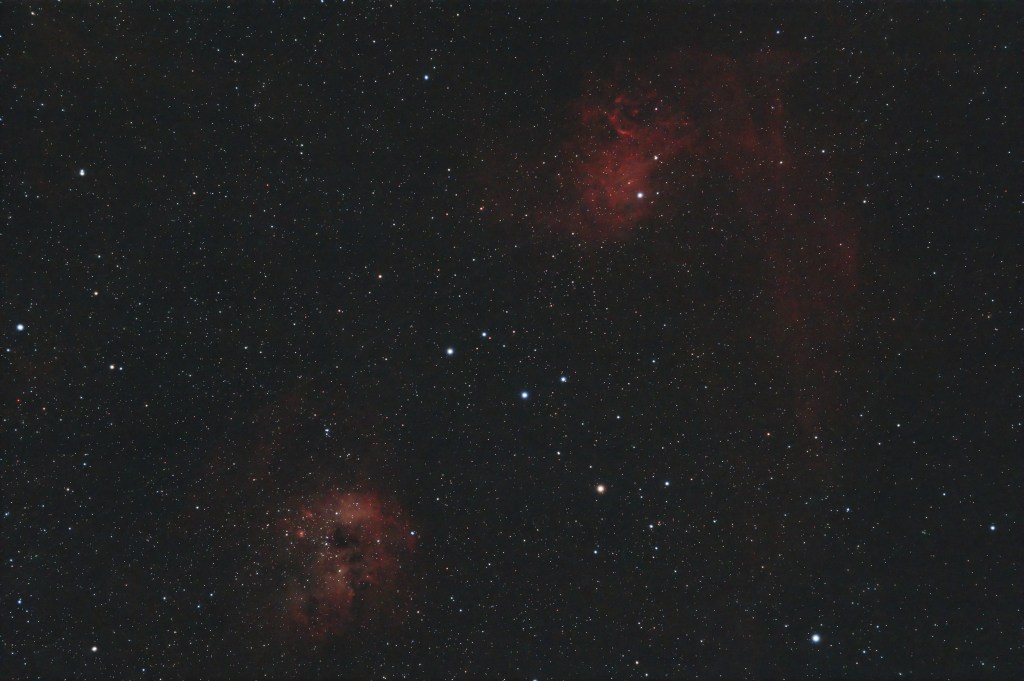
Now compare this single image that has been stretched to a stretch of the the stacked image (135).
The stretching process was exactly the same. The difference in detail and reduction in noise from the stacked image is clear, and can be further demonstrated when comparing a starless enlarged section of the two images
How are images taken with the camera stacked and stretched? All will be revealed
 Night Sky over Middleton